Charlotte’s new construction market is one of the most active in the country right now. As of August 2026, there are 401 active new-construction listings across 23 builders in the Charlotte area, with a median new-construction price of $398,995, according to AllNew.Homes. Builders pulled permits for approximately 2,394 new private housing units in April 2026 alone, a 37.7% year-over-year jump, and new-construction completions in the Charlotte metro increased 28% year-over-year through Q1 2026. If you’re buying or selling in Greater Charlotte, this boom changes your options, your competition, and your strategy.
The Scale of What’s Being Built, and Where
Drive through the outer suburbs and you’ll see it everywhere: cranes, freshly graded lots, subdivision signs going up faster than the grass grows in. This isn’t a marketing talking point. It’s backed by real numbers.
Charlotte issued permits for 18,500 new housing units in 2025, the highest annual total since 2007, according to a 2026 housing market overview citing permit data. On the multifamily side, the metro entered 2026 with 21,780 apartment units under construction, representing roughly an 8.5% expansion of existing multifamily inventory, making Charlotte one of the most supply-active multifamily markets in the country, per reporting from MMG Real Estate Advisors. The Q1 2026 pipeline showed approximately 18,000 multifamily units still under construction across about 70 properties.
That’s a lot of supply. But here’s what matters for buyers and sellers: demand is keeping pace. Redfin’s city-level tracker shows Charlotte home prices were up about 3.0% year-over-year over the three months ending June 2026, with a median sale price of roughly $438,000 across all home types. And according to Canopy MLS, the 16-county Charlotte region saw 4,304 properties sold in June 2026, essentially flat year-over-year, up just 0.2%, which tells me buyers are still active, even as inventory grows.
Where is new construction concentrated?
Most of the activity isn’t in the urban core. Land availability and lot costs push builders to the periphery, and that’s exactly where the bulk of new construction is happening in 2026. The corridors I watch most closely are:
- Lake Norman corridor (Huntersville, Cornelius, Mooresville), move-up and executive product, larger lots, master-planned communities
- South Charlotte (Ballantyne and beyond), a mix of townhomes and single-family at various price points
- Northeast Mecklenburg and Cabarrus County (Concord, Harrisburg), strong builder activity, more affordable entry-level options
- Gaston County (Gastonia, Mount Holly), some of the most accessible price points for new construction in the metro
- Outer Union County (Marvin, Waxhaw, Weddington), higher-end new builds with larger footprints
- Fort Mill, SC, just across the state line, with heavy builder activity and competitive pricing
If you’re considering Huntersville specifically, I’ve written about what makes that community worth a closer look, read my full breakdown of Huntersville here.
Who’s building?
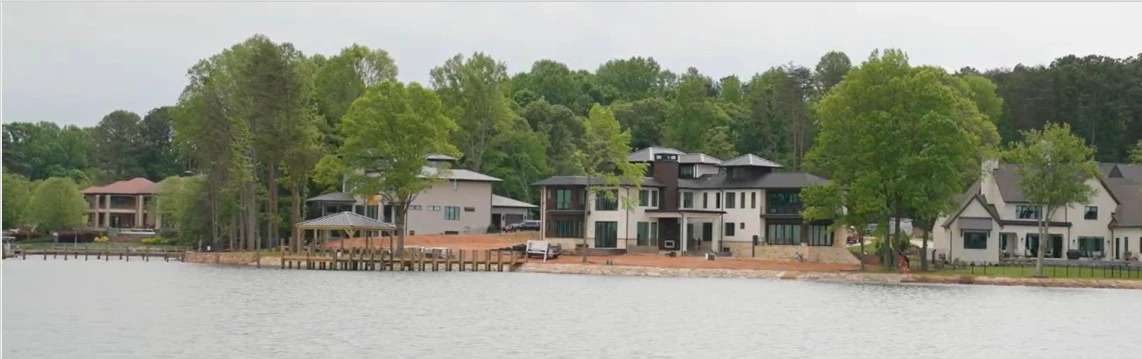
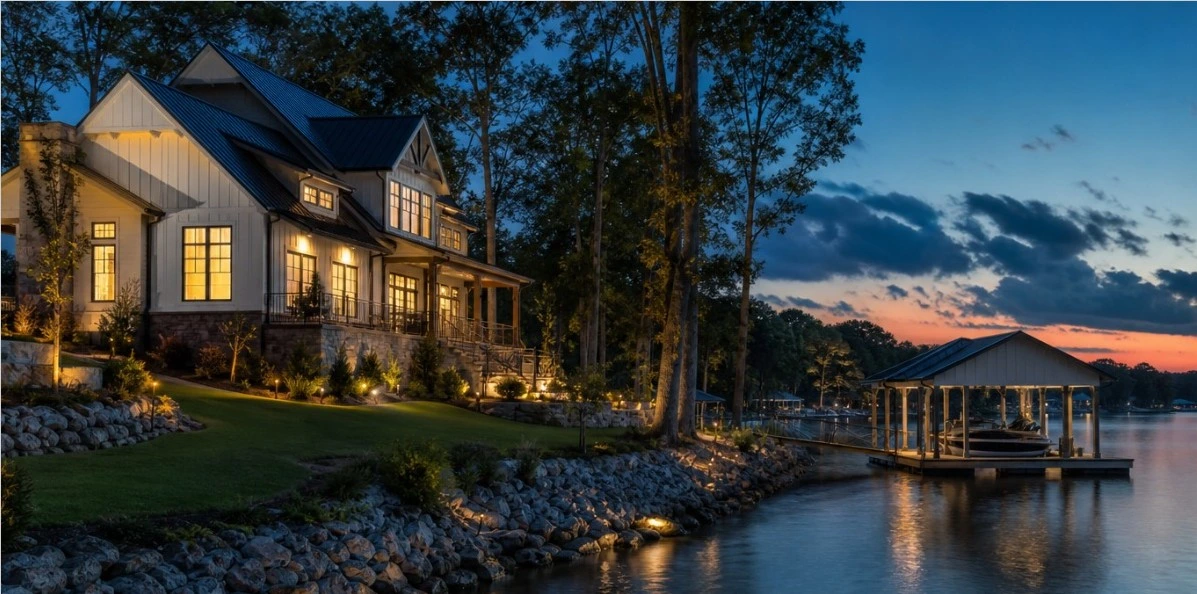
The major production builders active in Charlotte as of August 2026 include D.R. Horton, Lennar, Mattamy Homes, Taylor Morrison, Tri Pointe Homes, Mungo Homes, and DRB Homes, among others. On the higher-end and luxury side, local builders like Keystone Custom Homes, Simoni Homes, and Copper Builders are active in the market, delivering semi-custom and fully custom product at price points that compete directly with resale luxury inventory. Price ranges run from roughly $255,000 for entry-level townhomes up to nearly $3 million for custom and semi-custom builds, per AllNew.Homes. That spread matters, “new construction” in Charlotte is not one product. It’s everything from a compact townhome in Concord to a waterfront estate on Lake Norman.
What This Means If You’re Buying or Selling Right Now
For buyers: more options, but builder contracts are not standard purchase agreements
New construction has accounted for roughly one in three home purchases in the Charlotte metro every year since 2022, and 2026 is on pace to set a new record for new-build share of sales. That tells you this isn’t a niche, it’s a mainstream path to homeownership here.
The good news: months of supply in Charlotte reached about 3.2 months by March 2026, up from 1.8 months in Q1 2025, according to a Q1 2026 North Carolina market report citing U.S. Census Bureau building-permit data. You have more choices than buyers did two years ago.
The nuance: builder contracts are written by the builder’s attorneys, for the builder’s benefit. They are not the standard Offer to Purchase you’d use in a resale transaction. I walk every new-construction buyer through the contract line by line before they sign anything, because what looks like a standard purchase can include terms around price locks, change-order costs, earnest money forfeiture, and closing timelines that catch buyers off guard.
Builder incentives are also real and negotiable in 2026. Some builders, particularly on spec and inventory homes, are offering rate buydowns as low as 4.99% through their preferred lenders, seller-paid closing costs, and design-center allowances worth thousands of dollars. Traditional 2-1 and 3-2-1 buydown structures are still on the table as well. How much you can get depends on the builder, the community, and where that particular home sits in their sales cycle. That’s not something you can figure out from a website, it takes knowing the market and knowing how to ask.
For sellers: new construction is your competition
If you’re selling a resale home in a submarket with heavy new-construction activity, you’re competing with builders who can offer rate incentives, customization, and warranties. Recent Zillow market data shows a median sale price of $430,900 across Charlotte, with homes selling in a median of just 6 days, but that speed varies significantly by area. Look at the table below: Davidson sits at 42 median days on market, Cornelius at 51. In those markets, new construction inventory is part of why resale sellers need to be sharp on pricing and condition.
I tell my sellers the good, the bad, and the ugly, and right now, the reality is that a buyer in Huntersville or Matthews can walk into a brand-new home with a builder rate buydown and a design-center credit. Your resale home needs to compete on value, presentation, and price. That’s a conversation I have with every seller before we go to market.
Area-by-area market snapshot (August 2026)
| Area | Median Sale Price | Median Days on Market |
| Lake Norman | $614,603 | 16 |
| Charlotte | $430,900 | 6 |
| Huntersville | $585,000 | 21 |
| Davidson | $800,000 | 42 |
| Cornelius | $592,000 | 51 |
| Concord | $380,000 | 23 |
| Matthews | $500,000 | 50 |
| Mooresville | $510,000 | 21 |
Source: Zillow sales data, trailing ~90 days as of August 2026. Area-level medians, individual home values vary by condition, street, build year, and timing.
North Carolina closing process for new construction
One thing that surprises buyers coming from other states: North Carolina is an attorney-closing state. That means a real estate attorney, not just a title or escrow company, handles your closing, including the title search, document preparation, fund disbursement, and deed recording. The North Carolina State Bar describes this as standard practice across the state.
For new construction specifically, the attorney’s role includes reviewing the builder’s contract and HOA governing documents, coordinating lien releases, and collecting the North Carolina real estate excise tax at recording. That tax is set by state statute at $1.00 per $500 of the purchase price (or any fraction thereof) under North Carolina General Statutes Chapter 105, the rate itself is fixed by law and not negotiable. Who pays it, however, is a matter of contract negotiation between buyer and seller; confirm the allocation in your specific purchase agreement.
On disclosure: most new-construction sales in North Carolina still involve the North Carolina Real Estate Commission’s standard Residential Property and Owners’ Association Disclosure Statement, required under N.C. Gen. Stat. § 47E. Builders handle some questions differently than resale sellers, and there are narrow statutory exemptions, but as a buyer, expect to either receive this form or have any exemption explained to you before you make an offer.
Frequently Asked Questions
Is it better to buy new construction or resale in Charlotte right now?
It depends on your priorities. New construction gives you a warranty, modern finishes, and potentially builder incentives like rate buydowns, but you may wait 6-10 months for a to-be-built home, and the builder’s contract protects the builder first. Resale homes can offer established neighborhoods, larger lots, and faster closings, but may need updates. In my experience, the right answer comes down to your timeline, budget, and which submarkets you’re targeting, and that’s exactly the kind of analysis I do with every buyer before they commit to a path.
How long does it take to build a new house in Greater Charlotte?
For a production-builder spec or inventory home that’s already under construction, you could close in a matter of weeks. For a true to-be-built with structural and design selections, 2026 buyer guides for Charlotte generally cite 6-10 months from contract to completion, subject to weather, permitting, and trades availability. Some custom or semi-custom builds run longer. Get a written projected closing timeline in the contract, and build in flexibility on your end.
Which Charlotte suburbs have the most new construction activity?
The heaviest activity in 2026 is in the outer-ring suburbs and growth corridors: Huntersville, Cornelius, and Mooresville along the Lake Norman corridor; Concord and Harrisburg in Cabarrus County; Matthews and the South Charlotte area; Gastonia and Mount Holly in Gaston County; and Fort Mill, SC just across the state line. Waxhaw, Weddington, and Marvin are active for higher-end new builds. Most new construction permits are concentrated in these peripheral communities where land is available, not in the urban core.
Can I negotiate with builders on price in Charlotte in 2026?
On list price, builders are often less flexible than resale sellers, especially on to-be-built homes. But incentives are where the real negotiation happens in 2026. Rate buydowns, closing-cost credits, and design-center allowances on spec and inventory homes are common and genuinely valuable. The key is knowing which builders have inventory sitting, which communities have met their sales targets, and how to structure your ask. That’s local knowledge you can’t get from a builder’s website.
Do I need a North Carolina Residential Property Disclosure on a brand-new home?
In most cases, yes, or the builder will explain any applicable statutory exemption before you make an offer. The NC Residential Property and Owners’ Association Disclosure Statement is required by the North Carolina Real Estate Commission under N.C. Gen. Stat. § 47E for most one-to-four-family residential sales, including many new-construction transactions when a licensed broker is involved. Builders may respond to some condition questions differently than a resale seller, but buyers should expect the disclosure process to apply and should review it carefully, especially the Owners’ Association section if the home is in a community with an HOA.
Who pays the North Carolina excise tax at closing, buyer or seller?
The excise tax rate is set by state law at $1.00 per $500 of the purchase price, collected by the county register of deeds at recording per NC General Statutes Chapter 105 and administered by the NC Department of Revenue. The amount is fixed, it is not negotiable. Who bears that cost, however, is a matter of contract negotiation between the parties. In Greater Charlotte, it is common practice in many transactions for the seller to pay, but that is custom, not a legal requirement. Confirm the allocation in your specific purchase agreement and with your closing attorney.
Charlotte’s new construction boom is real, it’s visible, and it’s creating genuine opportunities for buyers who know how to navigate it, and real competitive pressure for sellers who don’t account for it. The market is more balanced than it was in 2021-2022, but it is not slow. Prices are still rising, demand is still strong, and the right move depends entirely on your specific situation, timeline, and target area.
If you want a straight read on whether new construction or resale makes more sense for your next move in Greater Charlotte, schedule a consultation with me and I’ll walk you through the numbers without the spin.
About Melissa Zimmerman
Melissa Zimmerman is a top-producing real estate agent with Berkshire Hathaway HomeServices Carolinas Realty, licensed since 2015 and serving buyers and sellers across North and South Carolina. With over $531 million in career sales and more than 500 homes sold, she specializes in luxury homes, waterfront properties, relocations, and first-time homebuyers throughout the Greater Charlotte metro, including Lake Norman, Huntersville, Davidson, Cornelius, Concord, Matthews, Mooresville, Waxhaw, Weddington, Fort Mill, and surrounding communities. Melissa holds ABR and Military Relocation Specialist designations, is recognized as a Top 250 Agent in the Canopy Realtor Association and one of the LKN Top 50 Women in Real Estate, and carries a 5.0-star rating on RealTrends Verified.
Berkshire Hathaway HomeServices · 440-503-3580
Equal Housing Opportunity. Melissa Zimmerman is a licensed Broker with Berkshire Hathaway HomeServices Carolinas Realty, regulated by the NC Real Estate Commission and SC Real Estate Commission. This article is general information only and does not constitute legal, tax, or financial advice, confirm your specific numbers and contract terms with your closing attorney, tax advisor, and lender.